
In this article4
Social Security's 3.6 percent raise for 2027 got the headlines, but it wasn't the only number that changed. Social Security also raised the earnings limit for people who work while collecting benefits, the most earnings that can be taxed for Social Security, and the federal SSI payment. Here are the 2027 figures from Social Security's own fact sheet, and a deadline coming up November 18 if you want to see your new benefit amount early.
📋Quick Summary
- If you're under full retirement age and working, you can earn $25,560 in 2027 before benefits are reduced, up from $24,480.
- In the year you reach full retirement age, the limit rises to $67,920.
- The maximum earnings subject to Social Security tax rises to $192,300.
- The federal SSI payment rises to $1,029 a month for an individual and $1,544 for a couple.
- Sign up for a my Social Security account and paperless notices by November 18 to see your 2027 benefit notice online in late November.
The Earnings Limit If You Work and Collect Benefits
Social Security's fact sheet sets the 2027 earnings limit at $25,560 a year, or $2,130 a month, for people under full retirement age. In the year you reach full retirement age, it's $67,920, or $5,660 a month. Both are up from 2026, when the limits were $24,480 and $65,160.
If you're under full retirement age all year, Social Security withholds $1 for every $2 you earn above the limit. In the year you reach full retirement age, it withholds $1 for every $3 above the higher limit, counting only earnings before the month you reach that age. Starting the month you reach full retirement age, there's no limit.
Withheld benefits aren't lost for good. Once you reach full retirement age, Social Security recalculates your benefit to give you credit for the months it withheld.
The Tax Cap and Work Credits
The most earnings subject to Social Security tax rises from $184,500 to $192,300 in 2027. There's still no cap on earnings subject to the Medicare tax.
It now takes $1,970 in earnings to earn one Social Security work credit, up from $1,890.
The maximum monthly benefit for someone retiring at full retirement age rises from $4,152 to $4,188.
Related Medicare Updates
SSI and Disability Figures for 2027
The federal SSI payment rises to $1,029 a month for an individual and $1,544 for a couple. The SSI resource limits stay at $2,000 for an individual and $3,000 for a couple. The higher SSI payments start December 31, 2026, while the Social Security increase starts with benefits in January 2027.
For people on disability benefits, the substantial gainful activity limit rises to $1,770 a month, or $2,950 for people who are blind. The trial work period threshold rises to $1,270 a month.
If you have limited income, see whether you qualify for help with Medicare premiums.
How This Fits With Medicare
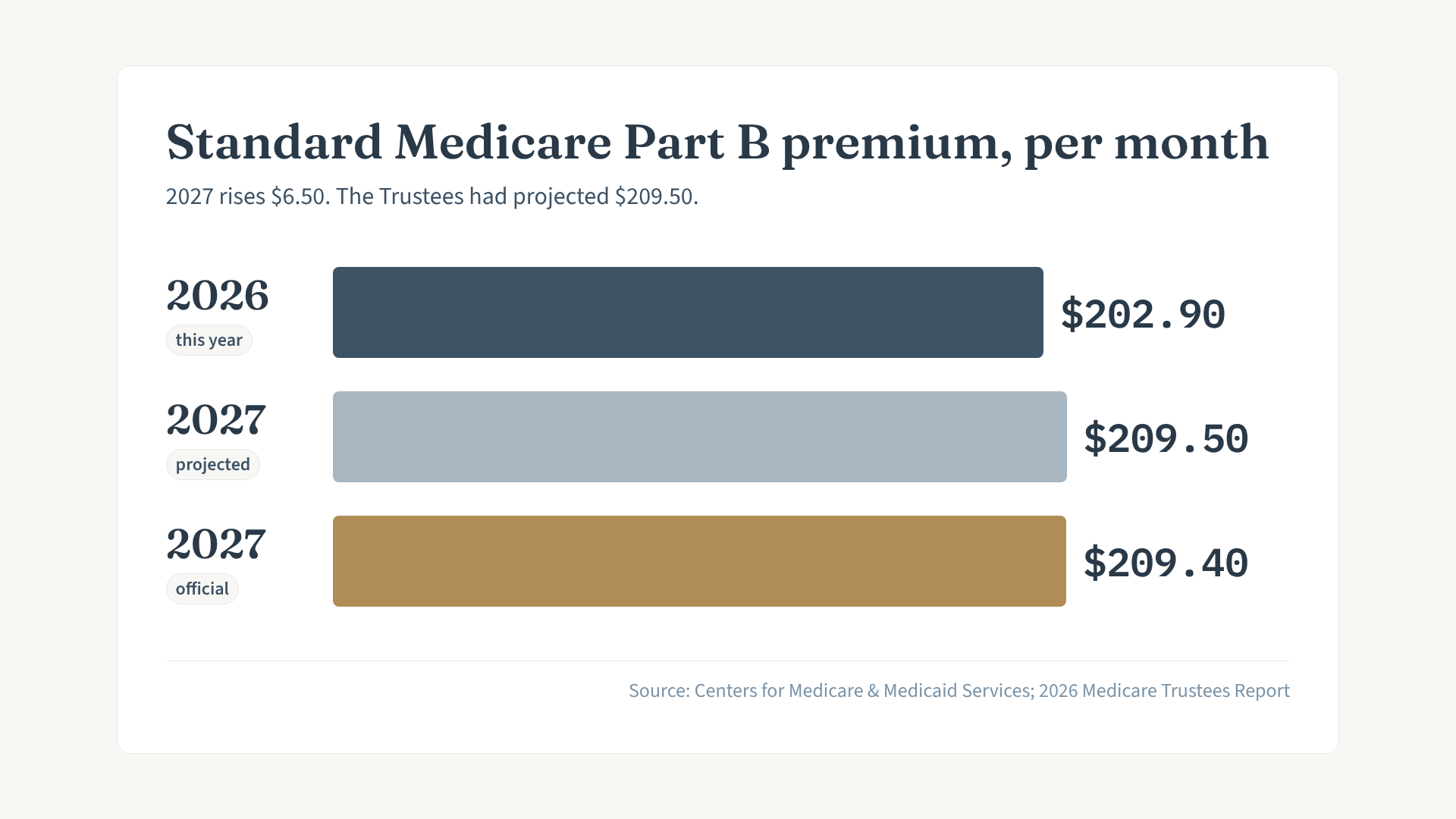
Social Security estimates the average retirement benefit will rise from $2,095 to $2,170 a month in January. For most people on Medicare, the Part B premium comes out of that check. The 2027 premium hasn't been announced yet, and Social Security says the 2027 Medicare premium amount will show up in the my Social Security Message Center starting in late November.
To see your new benefit notice online, create a my Social Security account and sign up for paperless notices by November 18. Otherwise, your notice comes by mail in December.
For everything else changing next year, see our guide to what's changing for Medicare in 2027.
✅What This Means For You
If you work and haven't reached full retirement age: You can earn up to $25,560 in 2027 before Social Security starts holding back benefits.
If you reach full retirement age in 2027: The limit is $67,920, and it disappears the month you reach that age.
If you get SSI: Your federal payment rises to $1,029 a month, or $1,544 for a couple, starting December 31.
If you're on Medicare: Watch for your 2027 notice and your my Social Security Message Center. Together they'll show your raise and your 2027 Medicare premium.
Sources
- 2027 Social Security Changes (COLA Fact Sheet) — Social Security Administration, Undated, accessed Nov 10, 2026
- Social Security Announces 3.6 Percent Benefit Increase for 2027 — Social Security Administration, Oct 14, 2026
- Receiving Benefits While Working — Social Security Administration, Undated, accessed Nov 10, 2026
- my Social Security — Social Security Administration, Undated, accessed Nov 10, 2026
Explore Further
Common questions about 2027 Social Security changes
- What is the Social Security earnings limit for 2027?
- If you're under full retirement age, the limit is $25,560 a year. In the year you reach full retirement age, it's $67,920. There's no limit once you reach full retirement age.
- What is the maximum taxable earnings for Social Security in 2027?
- $192,300, up from $184,500 in 2026. There's no cap on earnings subject to the Medicare tax.
- How much is SSI in 2027?
- The federal SSI payment is $1,029 a month for an individual and $1,544 for a couple, starting with the payment on December 31, 2026.
- What is the maximum Social Security benefit in 2027?
- $4,188 a month for someone retiring at full retirement age, up from $4,152.
- When will I see my 2027 Social Security notice?
- If you have a my Social Security account and signed up for paperless notices by November 18, you can see it online starting in late November. Otherwise, it arrives by mail in December.