In this article3
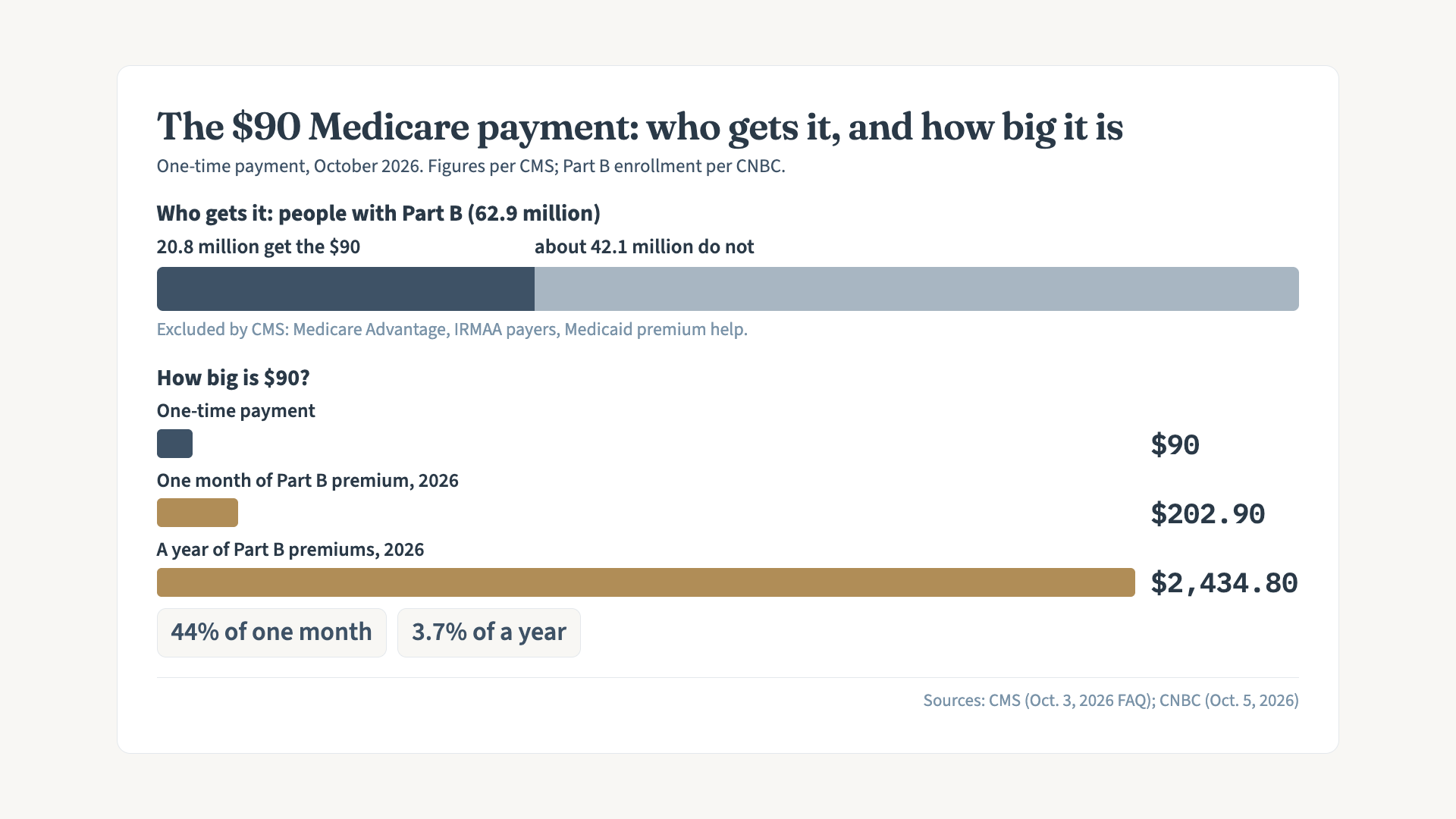
Millions of Medicare beneficiaries are about to face higher monthly costs in 2026 as the Centers for Medicare & Medicaid Services (CMS) confirm a significant increase to Medicare Part B premiums and deductibles. According to newly released figures, the standard Medicare Part B premium will rise to $202.90 per month in 2026, up nearly 10% from the 2025 premium of $185. The annual Part B deductible is increasing as well, landing at $283 for 2026.
This marks the first time Part B premiums have crossed the $200 threshold — a psychological milestone as much as a financial one. And for seniors who rely heavily on Social Security, the timing is especially tough. MarketWatch reports that roughly one-third of the 2026 Social Security COLA will be absorbed by the Part B premium hike, leaving many retirees effectively flat in real purchasing power.
While Medicare costs rise most years, this year's jump has received unusual attention from both policymakers and advocates. The premium increase is large enough to impact budgeting decisions for millions of households, especially for those living on fixed incomes and for new Medicare enrollees who aren't protected by the "hold harmless" rule.
Here's what's driving the surge — and what beneficiaries can do now to prepare.
Why Are Medicare Part B Premiums Increasing So Much in 2026?
Premium increases don't happen randomly or arbitrarily. CMS uses a formula that projects the coming year's medical spending for all Part B services, including outpatient care, physician services, diagnostics, durable medical equipment, and certain drugs administered in outpatient settings.
For 2026, CMS has cited four primary drivers of the nearly double-digit increase:
1. Higher Spending on Outpatient and Physician Services
America's senior population continues to grow rapidly as Baby Boomers age into Medicare. But it's not just population growth driving up spending — it's also the intensity and frequency of care.
Chronic conditions like heart disease, diabetes, kidney disease, COPD, and cancer survivorship care contribute heavily to Part B spending. CMS noted a particularly strong rise in cardiology, endocrinology, and oncology service utilization over the last 18 months. These visits, tests, and procedures fall squarely under Part B.
More seniors = more appointments, more imaging, more treatments — and higher program costs.
2. Price Growth in Durable Medical Equipment (DME)
Durable medical equipment has quietly become one of the more volatile spending categories in Medicare. Items like wheelchairs, walkers, glucose monitors, nebulizers, home oxygen supplies, and continuous monitoring devices have all seen price increases in the past two years.
Because DME is covered under Part B — not Part A or Part D — rising equipment costs directly raise the Part B actuarial baseline.
Industry analyses from 2024 and 2025 show average DME price inflation between 6% and 11% annually. CMS's Part B projections reflect these increases.
3. The Introduction of New High-Cost Biologics Under Part B
Another major factor is pharmaceutical innovation — especially biologics administered in clinical settings.
Over the past two years, several high-cost therapies for cancer, autoimmune conditions, and rare diseases have entered the Medicare market. Many of these medications are administered by infusion or injection in a doctor's office, which places them under Medicare Part B, not Part D.
When expensive new biologics shift from commercial insurance into Medicare, actuaries must immediately incorporate those costs into the next year's premium projections. Even small changes in the number of covered biologics can significantly alter the Part B spending forecast.
4. The Ripple Effect of the "Hold Harmless" Rule
The "hold harmless" rule protects many Social Security recipients from having their monthly benefit reduced due to higher Medicare premiums. In years with modest COLAs — like the 2026 COLA — this rule kicks in more strongly.
But here's the twist: when a large portion of beneficiaries are shielded from paying the full premium increase, the remaining beneficiaries must absorb those costs instead. The burden shifts onto:
- New Medicare enrollees
- Higher-income beneficiaries
- Dual-eligibles whose premiums are paid by state Medicaid programs
This cost-shifting can amplify premium increases for everyone who isn't protected — and 2026 is one of those years.
Who Will Be Hit the Hardest?
While the Part B premium increase affects nearly all beneficiaries, some groups will feel it more than others.
1. Seniors Who Rely Primarily on Social Security Income
For millions of retirees, Social Security is their main or only income stream. When the COLA is modest — and one-third of it is absorbed by Medicare premiums — budgeting becomes more difficult.
Rising food prices, rent, utilities, and property taxes were already straining household budgets. This premium hike compounds the pressure.
2. New Medicare Enrollees in 2026
New beneficiaries are never protected by the hold harmless rule. They always pay the full premium increase, regardless of Social Security COLA dynamics.
For someone turning 65 in 2026, starting Medicare with a $202.90 baseline Part B premium may require adjusting expectations about healthcare costs in retirement.
3. Low-Income Beneficiaries Not Eligible for Extra Help or Medicaid
This group sits in the toughest spot:
- They do not qualify for premium assistance
- They don't receive Medicaid support
- They may have Social Security as their only income stream
Even a $17–$20 monthly increase in premiums can strain limited budgets.
4. Retirees on Medicare Supplement (Medigap) Plans
Medigap premiums don't directly cause the Part B increase — but retirees who choose Medigap often do so to stabilize their out-of-pocket costs. Because their Medigap premiums are already higher than most Medicare Advantage enrollees, adding another layer of Part B cost can make the total monthly healthcare budget feel heavy.
Related Medicare Updates
What You Can Do Now to Prepare for the 2026 Premium Increase
The premium hike may be unavoidable — but beneficiaries still have real options to manage their overall Medicare costs going into 2026.
1. Re-Evaluate Your Entire Medicare Setup for 2026
Most beneficiaries think of Medicare decisions in isolation: Part B is "set," Part D is separate, Medicare Advantage vs Medigap is another decision.
But in reality, these parts function as an interconnected system. Sometimes you can't change the Part B premium — but you can find savings elsewhere.
2. Pay Close Attention to Medicare Advantage Changes in 2026
Major insurers like UnitedHealthcare, CVS/Aetna, and others have begun pulling back Medicare Advantage offerings in certain counties for 2026. Some rural areas are seeing multiple plan exits.
This matters because:
- Fewer choices = fewer low-premium options
- Network reductions = potential for higher out-of-pocket costs
- Plan exits = risk of being auto-assigned into a plan you don't want
Review your county's 2026 plan landscape early.
3. Factor in the New 2026 Part D Out-of-Pocket Cap
For 2026, the drug benefit has stabilized around the new out-of-pocket spending limit. For some beneficiaries — especially those with chronic medication needs — the Part D reforms may offset some of the financial pressure coming from Part B.
4. Review Prescription Lists Before Fall Enrollment Begins
Drug lists change every year, even if your plan name doesn't.
Check:
- Which drugs are dropping
- Which drugs are moving to a higher tier
- Whether your pharmacy is still in network
- If your medication is shifting between Part B and Part D
Doing this early gives you time to compare plans more strategically.
5. Build a 2026 Healthcare Budget That Accounts for the Higher Premium
It's wise to begin incorporating the $202.90 monthly premium into your 2026 retirement budget now. A small adjustment early in the year prevents financial stress later on.