In this article6
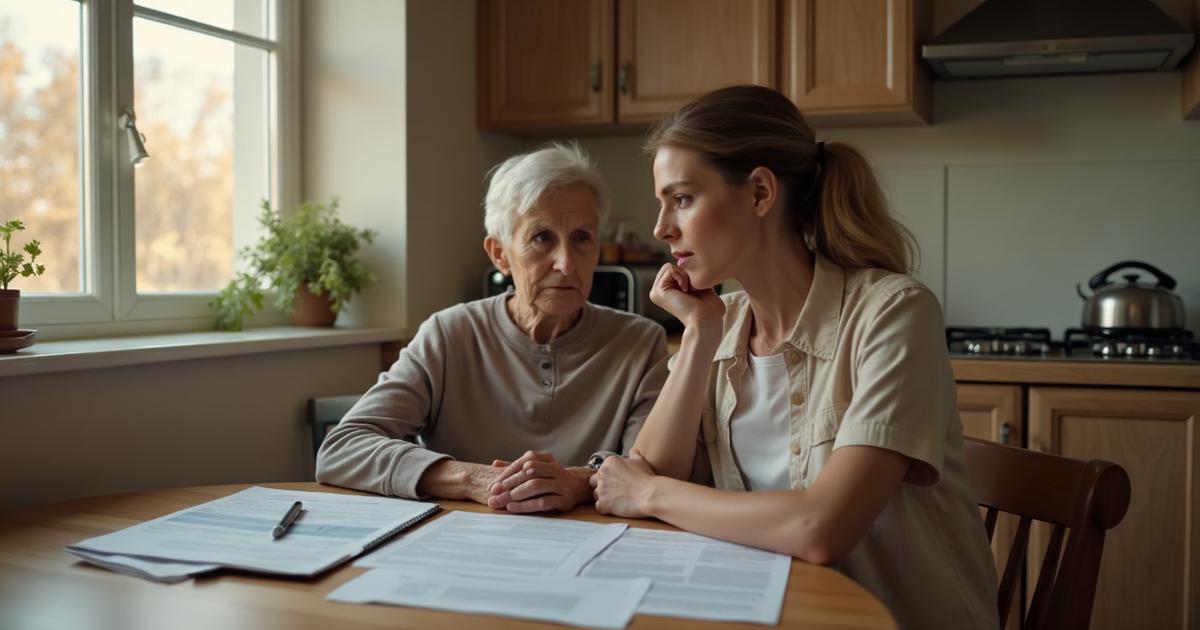
Linda Chen had circled the date on her calendar three times. January 15, 2026—the day her mother's Medicare Advantage plan would finally approve the cardiac specialist appointment that had been pending since October. Three months of prior authorization runarounds, each denial letter citing different reasons, each appeal requiring forms her mother couldn't complete alone. Linda had taken four half-days off work to navigate the process, sitting on hold with customer service while her own performance review deadline loomed.
Her mother, meanwhile, had stopped asking about the appointment. At 78, she'd learned to expect disappointment from systems that promised care but delivered complexity instead. She told Linda not to worry, that her chest pain wasn't so bad, that maybe it would resolve on its own. That's when Linda realized the true cost of these delays wasn't measured in copays or deductibles—it was measured in the quiet resignation of someone who'd begun to believe her health wasn't worth the fight.
This is the reality for millions of family caregivers in 2026, caught between the promise of Medicare coverage and the grinding reality of a system never designed for the way Americans actually age. Linda works full-time. She has two teenagers. She lives 45 minutes from her mother. She is, by every statistical measure, typical—one of roughly 53 million Americans providing unpaid care to aging relatives, a number that grows each year while the infrastructure to support them remains largely unchanged.
The Medicare reforms taking effect this year—the prescription drug cost cap, the tweaked prior authorization rules, the adjusted income brackets—are genuine improvements for many seniors. But for caregivers like Linda, navigating Medicare Advantage denials in 2026 while holding down jobs and raising families, these changes feel like rearranging deck chairs while the fundamental structure of aging in America threatens to collapse.
An Invisible Workforce Under Unsustainable Pressure
The math is straightforward and unforgiving. By 2030, all Baby Boomers will be 65 or older—more than 73 million Americans eligible for Medicare. The ratio of potential caregivers to care recipients continues to shrink as birth rates decline and families scatter geographically. Meanwhile, the professional caregiving workforce faces its own crisis, with home health agencies struggling to fill positions and nursing homes operating understaffed.
Into this gap step family members, mostly women, mostly middle-aged, mostly unprepared for what they're about to encounter. They become amateur nurses, insurance navigators, medication managers, and emotional anchors. They learn terms like "observation status" and "skilled nursing facility" and "durable medical equipment." They discover that Medicare caregiver support in 2026 means roughly what it meant in 1996—which is to say, very little formal assistance beyond scattered programs and goodwill.
The overlap between caregiver burnout and Medicare coverage gaps creates a particularly cruel bind. State regulators across California, Texas, New York, Florida, and Illinois have issued warnings about rising Medicare Advantage prior authorization denials, noting patterns of inappropriate delays and documentation requirements that seem designed more to discourage care than facilitate it. These aren't abstract policy failures—they're daily obstacles for people already stretched impossibly thin.
When a plan's provider directory lists specialists who retired two years ago or who aren't actually accepting Medicare patients, the burden of finding accurate information falls entirely on families. The difficulty finding in-network Medicare Advantage specialists in 2026 has become a running theme in caregiver support groups, where members share strategies like calling every office within 50 miles or paying out-of-pocket rather than fighting the system.
The Limits of Policy Tweaks
Related Medicare Updates
Here's what Medicare does well: it covers hospital stays, doctor visits, most prescription drugs, and short-term rehabilitation after acute health events. Here's what it doesn't cover: the long, slow work of aging—the daily assistance with bathing, dressing, meal preparation, and medication management that determines whether someone can remain safely at home.
Medicare home health benefits exist, but they're narrowly defined, requiring specific medical conditions and physician certification. They're designed for recovery from illness, not for the ongoing support most seniors actually need. Long-term care remains almost entirely the family's responsibility, financially and logistically.
The 2026 changes to Medicare Advantage—stricter oversight of prior authorizations, requirements for more accurate provider directories, adjustments to Star Ratings—address real problems. But they tinker at the edges of a fundamentally misaligned system. Original Medicare versus Medicare Advantage for caregiving needs becomes less about which option provides better coverage and more about which obstacle course seems more manageable.
For caregivers evaluating their parents' options during the Annual Enrollment Period, the questions multiply: Will this plan actually cover the doctors Mom has been seeing? What happens if the network shrinks mid-year? Are the pharmacy benefits stable, or will formulary changes in July require switching medications? The mental load of tracking Medicare 2026 out-of-pocket costs—the deductibles, the coinsurance, the coverage gaps, the donut holes that are closing but not gone—becomes its own full-time cognitive burden.
Higher-income caregivers face additional complexity around IRMAA brackets, particularly those still working past 65 who wonder should I delay Medicare Part B if I'm still working in 2026 while simultaneously managing a parent's care. The intersection of their own aging, their employment decisions, and their caregiving responsibilities creates planning scenarios that no reasonable person should be expected to navigate alone.
The Hidden Price Tag
The financial toll on family caregivers shows up in unexpected places. There's the obvious out-of-pocket spending—adult diapers, home modifications, copays for services insurance won't cover. But there's also the lost wages from reduced hours or missed promotions, the depleted retirement savings tapped for emergency expenses, the small business that never launched because there simply wasn't bandwidth.
💡What This Means for You
Explore Further
A caregiver earning $60,000 annually who cuts back to part-time loses not just immediate income but years of Social Security credits, 401(k) contributions, and career advancement. Multiply that across millions of families, and the economic impact becomes staggering—not just to individuals but to the broader economy.
The emotional costs resist quantification but feel no less real. There's the guilt of never doing enough, the resentment that occasionally surfaces despite love, the bone-deep exhaustion that settles in and doesn't lift. There's the isolation that comes from friends who can't quite understand why you canceled plans again, why you seem perpetually distracted, why you've aged five years in eighteen months.
Medicare mental health access for seniors in 2026 has expanded somewhat, but it rarely extends to supporting the mental health of caregivers themselves, who often neglect their own needs until crisis forces attention. The stress shows up as insomnia, weight gain, untreated chronic conditions, strained marriages, and relationships with children that feel like they're slipping away despite everyone's best intentions.
Small Steps in an Urgent Moment
None of this means caregivers are powerless. Within the constraints of the current system, there are still meaningful actions to take.
Start with a thorough Medicare checkup well before the Annual Enrollment Period ends. Review whether current providers will remain in-network for 2026, understand exactly what home health benefits the plan offers, and honestly assess whether Medicare Advantage's additional benefits outweigh the restrictions, or whether Original Medicare with a Medigap policy might offer more flexibility as caregiving needs intensify.
Connect with the State Health Insurance Assistance Program, which offers free, unbiased counseling. The Area Agency on Aging can provide information about local caregiver support services, respite care options, and community resources that exist outside Medicare's framework. These programs are underfunded and overwhelmed, but they're staffed by people who understand both the system and the human cost of navigating it.
Prepare financially for out-of-pocket expenses that insurance won't cover. This might mean HSA contributions for those still working, or simply acknowledging that aging at home costs money—for home modifications, for occasional private-pay help, for the thousand small things that make the difference between safety and risk.
Most importantly, let go of the myth of doing it alone. Build a network of other caregivers, whether through formal support groups or informal connections. Share information about which specialists are actually accepting Medicare patients, which home health agencies respond promptly, which pharmacies handle Part D issues efficiently. This crowdsourced knowledge becomes survival information.
A Closing Reflection
Linda's mother eventually got her specialist appointment in late January. The doctor was kind, the tests inconclusive but not alarming. The three-month delay probably didn't change the medical outcome. But something had changed between them—a trust eroded, a sense that the systems meant to help them had instead added burdens neither could fully articulate.
On the drive home, her mother thanked Linda for persisting through the denials and appeals, for taking time off work, for caring enough to fight. Linda wanted to say it shouldn't require fighting, that basic healthcare shouldn't demand this level of advocacy and expertise, that neither of them should have to become insurance experts just to navigate what was supposedly already covered.
Instead, she reached over and squeezed her mother's hand. Because that's what caregivers do—they absorb the impossible complexity, shoulder the emotional weight, and keep going because the alternative isn't really an alternative at all.
The 2026 Medicare changes help at the margins. They're not nothing. But until policy catches up with demographic reality, until long-term care receives the attention and funding it desperately needs, until supporting caregivers becomes a systemic priority rather than an afterthought, families like Linda's will continue carrying burdens that no society should ask them to bear alone.
The quiet crisis isn't coming. It's here. And it's time we stopped pretending that minor policy adjustments will be enough to meet this moment.