In this article4
You chose your Medicare Advantage plan partly because of what came with it. The over-the-counter card for vitamins and pain relievers. The gym membership through SilverSneakers or Renew Active. The transportation to medical appointments. The meal delivery after a hospital stay. The grocery allowance. These extras — the benefits Original Medicare doesn't cover — were the whole pitch when insurers signed you up. In 2026, many of those benefits have quietly shrunk, been restricted, or disappeared entirely. The plans are still called Medicare Advantage. The extras that defined them are increasingly not. Here's what's actually changed, and what your options are.
📋Quick Summary
- Many Medicare Advantage plans cut supplemental benefits in 2026 due to financial pressure on insurers.
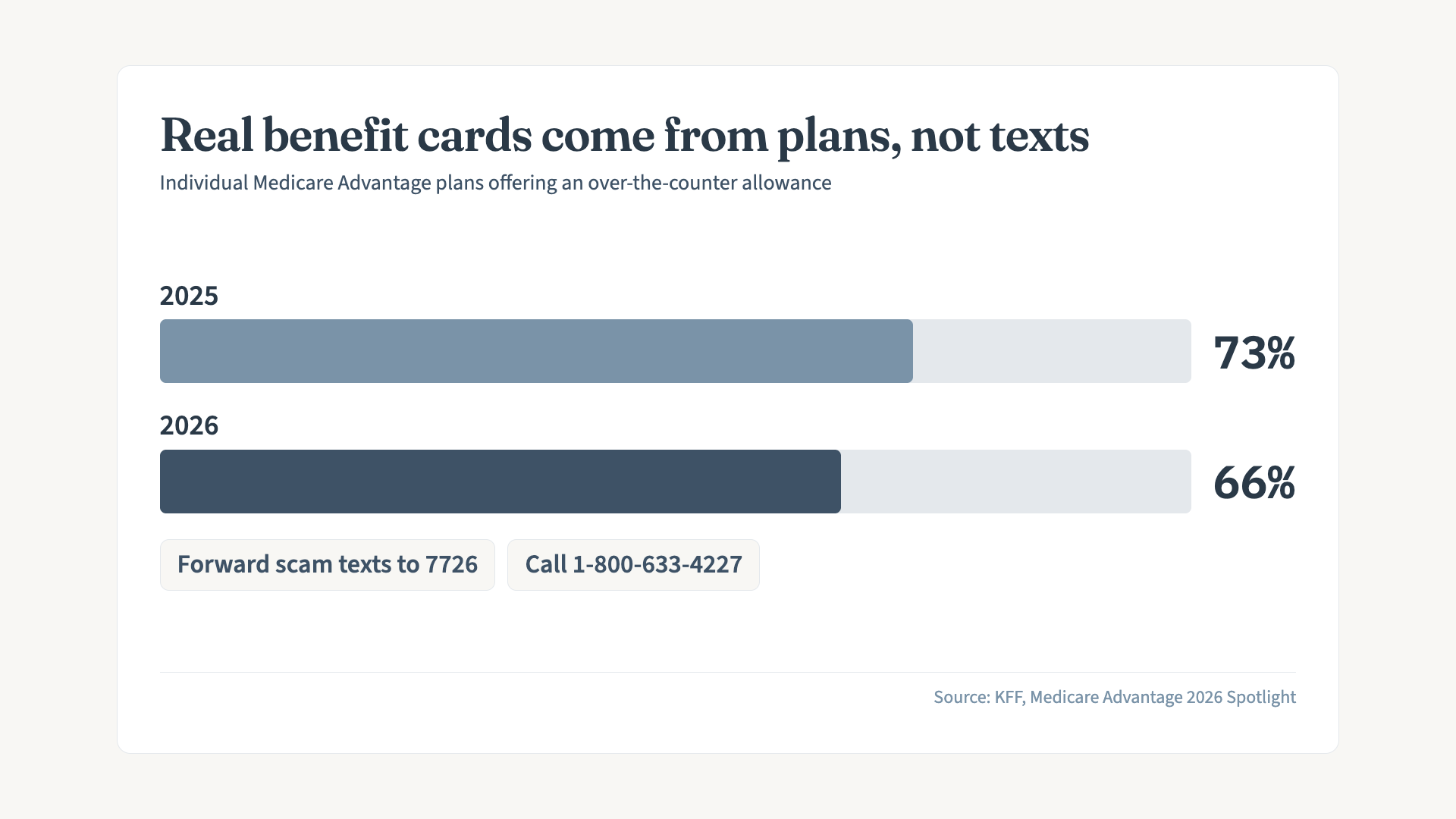
- OTC allowances dropped from being offered by 73% of plans in 2025 to 66% in 2026.
- Meal benefit availability fell from 65% of plans to 57%.
- Fitness benefits like SilverSneakers are being scaled back or removed from some plans entirely.
- Transportation, dental, and vision benefits have also seen reductions in specific plans.
- The benefit you used last year may not be the same benefit available this year — even within the same plan.
- Reviewing your Evidence of Coverage document each year is the only reliable way to know what you have.
- Open enrollment (October 15–December 7) is the window to switch if your plan no longer fits.
What's Being Cut — and By How Much
The supplemental benefits that distinguish Medicare Advantage plans from Original Medicare were always optional extras layered on top of the core federal coverage. Insurers offered them to attract enrollees. In 2026, the financial math behind those extras has shifted, and the result is visible across multiple benefit categories.
Over-the-counter allowances — the prepaid cards seniors use at pharmacies and grocery stores for items like vitamins, allergy medication, and bandages — have been one of the most visible cuts. According to industry analysis, the share of Medicare Advantage plans offering OTC benefits dropped from approximately 73 percent in 2025 to 66 percent in 2026. For plans that still offer the benefit, the dollar amounts have often been reduced or the list of eligible items narrowed. A senior who relied on a $200 quarterly OTC card may now have a $100 card, or none at all.
Meal benefits have seen similar reductions. The share of Medicare Advantage plans offering meal benefits — typically delivered meals after a hospital discharge or for members with chronic conditions — fell from 65 percent in 2025 to 57 percent in 2026. For seniors who used this benefit during recovery or as a regular nutrition support, the change can mean either out-of-pocket costs for meal services or a return to managing meal preparation without help during difficult periods.
Fitness benefits — including SilverSneakers, Renew Active, and similar gym membership programs — have been quietly restructured in many plans. Some plans have eliminated the benefit entirely. Others have switched from offering full SilverSneakers access to less comprehensive programs with fewer participating gyms. The group exercise classes and community-based fitness aspects that many seniors valued as much as the physical activity itself have been particularly affected.
Transportation benefits — non-emergency rides to medical appointments — have also been reduced in many plans. The number of covered rides per year has fallen in some plans, and others have limited which appointment types qualify for transportation coverage. Dental, vision, and hearing benefits have continued the trend we've covered before — broad availability but often with reduced annual maximums, narrower networks, and more restrictive coverage of restorative services. For a deeper look at how those benefits specifically have changed, see our breakdown of what 2026 Medicare actually covers for dental, vision, and hearing.
📋 Your Evidence of Coverage has changed — have you seen it?
Every Medicare Advantage plan sends an Evidence of Coverage document to enrollees each fall, describing in detail what the plan covers for the upcoming year. The document is typically 100+ pages long, and most enrollees never read it. They renew their plan automatically, then discover months later that a benefit they relied on has been reduced or eliminated. For 2026, this matters more than usual. If you have not reviewed your current EOC — particularly the sections on supplemental benefits like OTC, meals, transportation, fitness, and dental — do it this week. Compare what's listed there with what you remember from 2025. If anything important to you has changed, you have until December 7 of this year to switch plans during the next Annual Enrollment Period.
Why This Is Happening — and Why It's Not Likely to Reverse
The benefit cuts of 2026 are not random or sudden. They reflect a structural shift in how Medicare Advantage plans are being funded and operated, and the forces driving the cuts are not expected to reverse in the short term.
The most direct pressure has come from federal payment rates. The Centers for Medicare and Medicaid Services has tightened the formula that determines how much insurers receive per enrollee, in part to address what regulators and watchdogs have described as years of overpayments to Medicare Advantage plans relative to traditional Medicare. The payment adjustments have squeezed insurer margins, and the supplemental benefits — which are the most discretionary part of MA plan economics — have been the easiest place to cut.
Medical utilization has also surged. Seniors who deferred care during the pandemic years have been catching up on procedures, screenings, and treatments that were postponed. That surge has increased what plans pay out in actual healthcare costs, again pressuring the budget available for everything else. Insurers cannot reduce their core Medicare coverage obligations — those are federally mandated. They can reduce extras. So they have.
There is also a longer-term competitive dynamic at work. Medicare Advantage spent years competing primarily on benefit richness — who could offer the most generous OTC card, the most extensive fitness program, the most comprehensive dental coverage. That competition pulled benefits richer than the underlying economics could sustain at the payment rates plans were receiving. As rates adjusted, the benefit competition has reversed: plans are now competing on which can cut benefits without losing too many enrollees.
For 2026, the cuts have been broadly distributed across most major insurers. Humana, which began trimming benefits earlier than competitors, kept its 2026 benefits relatively stable. Other insurers including UnitedHealthcare, Aetna, and various regional plans have made more significant 2026 cuts. Looking ahead, industry analysts expect continued benefit pressure into 2027 unless federal payment rates rise substantially — which is not the current direction of policy.
The honest takeaway is that the "extras" model that defined Medicare Advantage marketing for the past decade is being scaled back. The plans still offer more than Original Medicare in most cases. They offer measurably less than they did two years ago. For the bigger picture on how the program is being reshaped this year, our overview of the 2026 CMS Medicare Advantage overhaul covers the policy backdrop in depth.
Related Medicare Updates
✅What This Means for You
Explore Further
What to Do If Your Specific Benefit Was Cut
The response that makes sense depends on which benefit changed and how much it mattered to you. Some cuts can be worked around. Others may justify shopping for a new plan.
If your OTC card was reduced or eliminated, the workaround often involves shopping smarter rather than switching plans. Many pharmacies and grocery stores offer their own discount programs for seniors. Sam's Club and Costco both sell vitamins and OTC medications in bulk at significantly lower prices than individual stores. For specific medications you used the OTC card for regularly, calculate the actual annual cost — if it's $300 or $400, that's meaningful but may not justify changing your entire health plan.
If your fitness benefit was cut and you used it regularly, the substitution depends on what's available locally. Many YMCAs offer senior memberships at reduced rates. Community centers and Parks and Recreation programs often run senior fitness programs for free or at minimal cost. SilverSneakers is also offered separately by some insurers as an add-on benefit to Medigap policies, depending on the state and carrier. If gym access is genuinely central to your routine, this is worth research before assuming you've lost it.
If your meal benefit was cut and you used it during a recent recovery, the alternative options include Meals on Wheels in most communities — a separate program from Medicare that delivers meals to homebound seniors based on need rather than insurance enrollment. The Older Americans Act funds several similar programs nationally. State Area Agencies on Aging can connect you with what's available locally.
If your transportation benefit was cut, ride-share programs designed for seniors have proliferated in many areas. GoGoGrandparent, for example, books rides through Uber and Lyft for seniors who don't use smartphones. Some communities have volunteer transportation networks specifically for medical appointments. SHIP counselors can identify local programs you may not know about — our Medicare resources directory links to state SHIP offices and Area Agencies on Aging.
If multiple benefits you valued have been cut, that's the signal that comparison shopping during open enrollment is probably worth your time. The Annual Enrollment Period runs October 15 through December 7. Use Medicare.gov's Plan Finder to compare plans in your zip code, looking specifically at the supplemental benefits that matter to you. Our plan comparison tool can help you line up what you have today against what's actually available in your area.
| OTC allowances | 73% of plans (2025) → 66% (2026) |
|---|---|
| Meal benefits | 65% of plans (2025) → 57% (2026) |
| Fitness (SilverSneakers, etc.) | Restructured or cut in many plans |
| Transportation (non-emergency) | Reduced ride counts in many plans |
| Dental (preventive) | Still widely available, narrower scopes |
| Dental (restorative) | More limited, lower annual caps |
| Vision | Widely available, broadly stable |
| Hearing | Stable with allowance variations |
The Long View — What This Pattern Means Going Forward
The 2026 benefit cuts are not a one-year correction. They're part of a multi-year recalibration in how Medicare Advantage works, and beneficiaries who treat their plan as "set it and forget it" are likely to be increasingly disappointed.
The honest framing is this: Medicare Advantage was always a private market product offered under federal rules, and like all private market products, its value proposition shifts based on the economics facing the insurers offering it. When federal payment rates were generous, plans competed on benefit richness, and seniors enrolled enthusiastically. As payment rates have tightened, plans have competed less on extras and more on operational efficiency — which means cuts to the discretionary parts of the benefit package.
Looking forward, the trend lines suggest beneficiaries should expect more variation between plans, more changes year to year within plans, and a steady erosion of the supplemental benefits that defined MA's appeal a decade ago. Some plans will likely lean into supplemental benefits as competitive differentiators. Others will scale back to bare-minimum supplemental coverage. The result will be a more fragmented market where what you get depends substantially on which plan you happen to be enrolled in.
For seniors, the practical implication is that annual review of your coverage has shifted from optional best practice to necessary maintenance. Reading your Evidence of Coverage document each fall. Comparing plans during Annual Enrollment Period. Asking SHIP counselors for help when needed. These aren't paranoid checks — they're how you stay covered in a market that is genuinely changing under you.
The Medicare Advantage plan that worked for you in 2022 may not be the same plan in 2026, even if the name on your insurance card hasn't changed. Treating it as if it is, is the most common way seniors end up with coverage that no longer matches their needs. The benefits exist. They've shifted. Knowing what you have now is the foundation for making sure your plan still serves you. If you want a structured walk-through of your options, Find Your Medicare Path can help you decide whether to stay, switch, or rethink Medicare Advantage entirely.
Wondering what the alternative looks like? What Does 2026 Medicare Plan G Actually Cover? breaks down what Original Medicare paired with a Medigap Plan G policy pays, what it costs in 2026, and the enrollment window that decides whether you can buy it at all.