In this article4
The prescription you just picked up may have been chosen for you by your insurance company, not your doctor. For Medicare beneficiaries managing chronic pain, recovering from surgery, or dealing with arthritis, this is more than a billing technicality. Medicare Part D plans routinely place opioids on their cheapest tier while making safer non-opioid alternatives more expensive — or blocking them behind prior authorization and step therapy requirements that delay access for weeks. The result is a system that quietly steers older adults toward medications with the highest addiction risk, at a time when overdose deaths among seniors have nearly tripled in a decade. There are things you can do about it, starting at the pharmacy counter.
📋Quick Summary
- Drug overdose deaths among Americans 65 and older have nearly tripled in the past decade.
- In 2023, 1.2 million Medicare beneficiaries had opioid use disorder and more than 53,000 experienced an overdose.
- Medicare Part D plan formularies often place opioids on the cheapest cost tier while putting safer pain alternatives on higher tiers.
- Many non-opioid alternatives require prior authorization or step therapy — meaning you must try cheaper drugs first, even if your doctor recommends something else.
- The Alternatives to PAIN Act, introduced in Congress with bipartisan support, would require Part D plans to remove these barriers for non-opioid treatments.
- Until policy changes, knowing how to navigate your plan's formulary is the most effective protection.
A Crisis Hiding in Plain Sight
The opioid epidemic has been one of the most covered public health stories of the past decade. But the version of that story most people know — about teenagers, working-age adults, urban and rural communities in equal measure — has largely overlooked the population now experiencing some of its fastest-rising harms: Americans over 65.
Drug overdose deaths among Americans 65 and older have nearly tripled over the past decade, according to data cited by physicians working in pain management and addiction medicine. In 2023 alone, 1.2 million Medicare beneficiaries had opioid use disorder, and more than 53,000 experienced an overdose. These are not abstract figures. They represent grandparents, retired workers, neighbors — people who, in many cases, began taking opioids after a hip replacement, a back injury, or a surgery and never fully transitioned off them.
What makes the senior version of the crisis particularly difficult is that the path into dependency often runs through legitimate medical care. A 70-year-old recovering from spinal surgery is rarely the patient anyone pictures when they think about opioid addiction. But the same biology that makes opioids effective for acute pain makes them addictive — and that biology doesn't care about age. Older adults are also more likely to be on multiple medications simultaneously, which raises the risk of dangerous drug interactions. They're more likely to live alone, which means a problem can escalate without anyone noticing. And they're more likely to be trusting of their healthcare system, which can mean accepting whatever the pharmacy hands them without asking questions. Our coverage of 2026 Part D changes walks through how plan structures continue to shape what you actually get at the counter.
The Question That Can Change Your Treatment
Before filling a prescription for any pain medication, ask your doctor a single question: "Is this an opioid, and is there a non-opioid alternative my plan covers?" Most patients never ask. Most doctors won't volunteer it unless asked, partly because they often don't know what's on your specific Part D formulary. If your doctor confirms there is a non-opioid alternative, the next step is to call your Part D plan and ask whether it's covered, what tier it's on, and whether prior authorization is required. This 10-minute phone call can change which medication you go home with — and which one you don't.
How Part D Formularies Quietly Steer Patients
Related Medicare Updates
To understand why Medicare beneficiaries are being directed toward opioids by their own insurance, it helps to understand how Part D plans actually work. Every Part D plan publishes a formulary — a list of every medication the plan covers and what tier each drug falls on. The tier determines what you pay. Tier 1 drugs are typically generic and cheap, often $0 or $5 per fill. Higher tiers carry higher costs, sometimes $50 or $100 per fill, or coinsurance percentages on expensive medications.
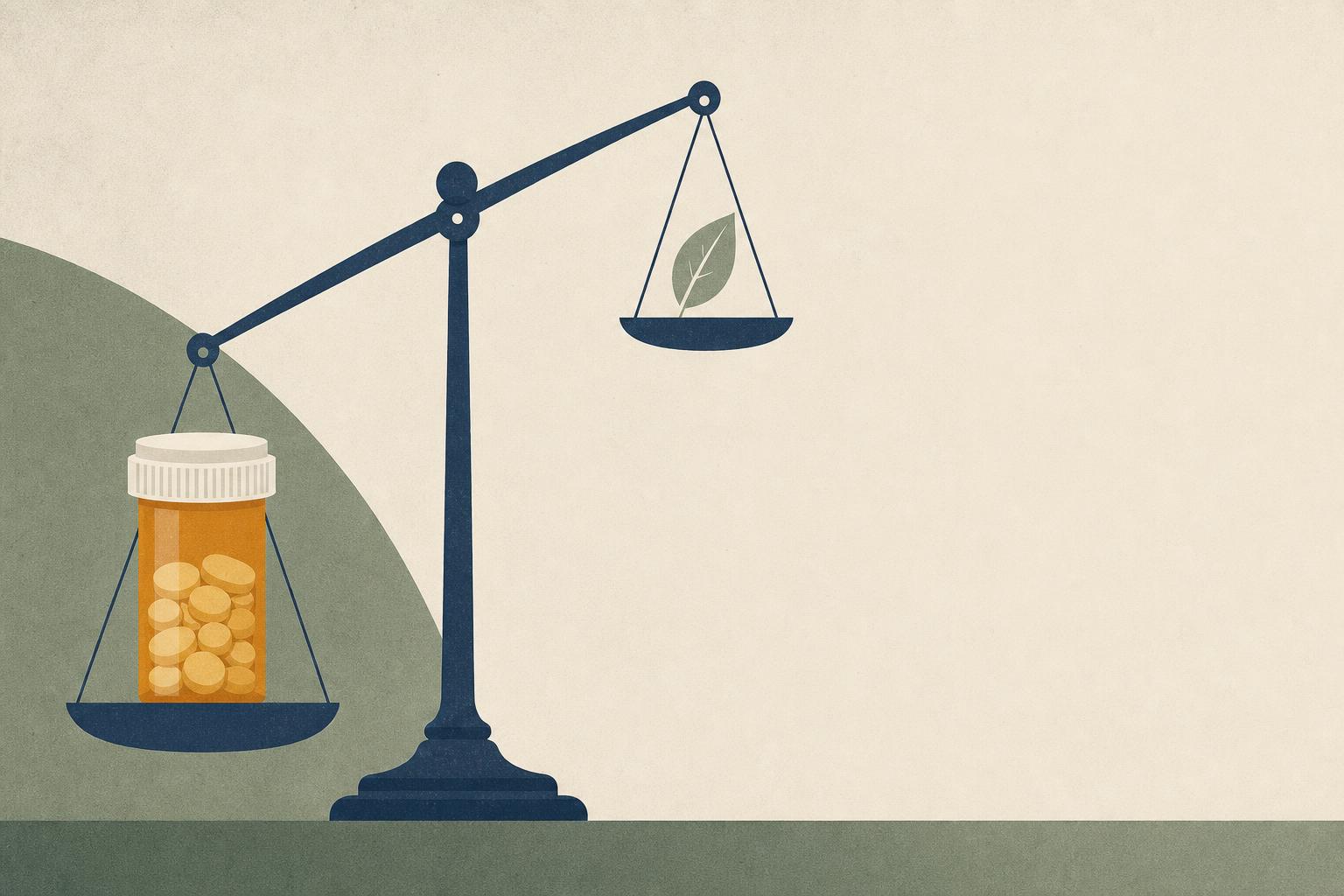
For pain management, this tiering system has produced an outcome that pain specialists describe as deeply problematic. Common opioid medications — including generic versions of oxycodone, hydrocodone, and morphine — are typically placed on Tier 1 or Tier 2, meaning they cost very little out of pocket. Safer non-opioid alternatives, including newer non-addictive pain medications and certain injectable treatments, are frequently placed on higher tiers — sometimes Tier 3 or Tier 4 — where copays can run $50, $100, or more per prescription.
The cost gap is only part of the problem. Many Part D plans also require prior authorization for non-opioid alternatives, meaning your doctor must submit paperwork to the insurer explaining why the medication is medically necessary before it will be covered at all. Other plans use step therapy, also called "fail first," which requires you to try and fail on a cheaper medication — often an opioid — before the plan will pay for the alternative. These administrative barriers can add days or weeks to the time it takes a patient to actually get a prescription filled. For someone in significant pain after surgery, that delay can be the difference between a successful recovery and a return to the medication they were trying to avoid. Our reporting on step therapy expansion in 2026 details how these requirements have grown across plans.
The result is a system in which the cheapest, easiest, fastest option to fill is often the one with the highest addiction risk. Patients aren't being told they should take opioids. They're being told, structurally and financially, that taking opioids is what's available.
✅What This Means for You
Explore Further
The Legislative Fix That's Slowly Moving
The problem has not gone unnoticed in Washington. The Alternatives to PAIN Act, introduced in Congress with bipartisan support, would directly address the formulary steering issue by requiring Medicare Part D plans to waive deductibles for qualifying non-opioid treatments, place them on the lowest cost-sharing tier, and prohibit prior authorization and step therapy requirements for these medications. In effect, the bill would put non-opioid pain treatments on equal footing with opioids — eliminating the structural incentive that currently pushes patients toward the more dangerous option.
The legislation had a House hearing in March 2026 with support from both Republicans and Democrats, a rare moment of agreement on healthcare policy. A companion development came when CMS extended Medicare reimbursement to more qualifying non-opioid treatments under the NOPAIN Act on March 27, 2026. That regulatory move expanded coverage for non-opioid options in certain clinical settings — but it did not change what seniors pay at the pharmacy counter under Part D, which is where the day-to-day choice actually happens.
The Alternatives to PAIN Act has not yet been signed into law, and there is no firm timeline for when or whether it will be. Even strong bipartisan bills routinely take years to move through Congress. In the interim, the formulary structures that produced the current pattern remain in place across virtually every Part D plan in the country.
Critics of the bill have argued that mandating low-tier placement for non-opioid alternatives could raise premiums, since plans would absorb more of the cost. Supporters point to the downstream costs of opioid dependency — emergency department visits, addiction treatment, long-term disability — and argue that any short-term premium increase is more than offset by long-term savings. The debate is real and ongoing. The crisis is not waiting for it to resolve. Our 2026 Medicare roadmap tracks the policy fights that affect what you pay and what you can access.
| Increase in overdose deaths, Americans 65+ (past decade) | Nearly tripled |
|---|---|
| Medicare beneficiaries with opioid use disorder (2023) | 1.2 million |
| Medicare beneficiaries who experienced an overdose (2023) | 53,000+ |
| Typical Part D tier for common generic opioids | Tier 1 or Tier 2 |
| Typical Part D tier for non-opioid alternatives | Tier 3 or Tier 4 |
| Number to call your Part D plan | On your member ID card |
| Medicare's general helpline | 1-800-MEDICARE (1-800-633-4227) |
| Free Medicare counseling | SHIP / 1-800-MEDICARE |
What You Can Do This Week
The system isn't going to change quickly. But your relationship with it can change immediately, starting with three concrete steps.
The first is to know what's in your medicine cabinet. If you are currently taking any prescription pain medication, look at the bottle and identify whether it's an opioid. Common opioids include oxycodone (brand names include OxyContin and Percocet), hydrocodone (Vicodin, Norco), morphine, codeine, tramadol, and fentanyl. If you're taking one of these and weren't aware, that's not a judgment — many people aren't told. But it's important information, and it should prompt a follow-up conversation with your prescribing doctor about whether the medication is still appropriate, whether the dose can be reduced, and whether a non-opioid alternative would now make sense.
The second is to call your Part D plan and request a copy of their formulary, or download it from the plan's website. Look specifically at how they cover non-opioid pain alternatives — including newer non-addictive medications, topical treatments, and certain injectable options. Knowing what your plan covers, at what tier, with what restrictions, gives you the information you need to advocate for yourself the next time a pain medication is prescribed.
The third is to engage your doctor as a partner in this. Most physicians want to prescribe the safest effective option for their patients. What often gets in the way is incomplete information about what a specific Part D plan covers at a reasonable cost. When you bring that information to the visit — "my plan covers this alternative at Tier 2 without prior authorization" — you've removed one of the biggest practical barriers to a safer prescription. SHIP counselors, who provide free unbiased Medicare help in every state, can also walk you through a formulary exception request if your plan refuses to cover a safer alternative; you can find your state's SHIP through our Medicare resources directory.
The structural problem is real. So is your ability to navigate around it while it gets fixed. If you're weighing how plan structure changes the medications you actually receive, our guide comparing Medicare Advantage and Medicare Supplement coverage is a useful place to start that decision.