In this article5
Sometime in the next six weeks, a thick envelope from your Medicare Advantage or Part D plan will land in your mailbox. It looks like the rest of the Medicare mail you've learned to ignore — dense, official, easy to set aside. It isn't. This document, called the Annual Notice of Change, is the only thing that tells you precisely how your plan will be different on January 1: what your premium becomes, which of your drugs are still covered, whether your doctor is still in network, and what benefits disappeared. By law it has to reach you by September 30, and the reason for that deadline is deliberate — it gives you two weeks to absorb what changed before the enrollment window opens October 15. Here's how to read it in under thirty minutes.
Planning for next year? See what's changing for Medicare in 2027.
📋Quick Summary
- Your Annual Notice of Change (ANOC) must be delivered by September 30, 2026, covering changes effective January 1, 2027.
- Only Medicare Advantage and Part D plans send ANOCs — if you have Original Medicare with a Medigap policy, you won't receive one.
- The document lists changes to premiums, deductibles, copays, out-of-pocket maximums, drug formularies, and provider networks.
- It also tells you if your plan is being discontinued entirely — a change that triggers special enrollment rights.
- The Annual Enrollment Period runs October 15 through December 7, 2026, which is your window to act on anything you don't like.
- If you don't receive your ANOC by early October, request one from your plan; if that fails, call 1-800-MEDICARE.
- Doing nothing means your plan auto-renews with all its changes intact.
What the ANOC Actually Is — and Who Gets One
The Annual Notice of Change is a plan-specific document that Medicare Advantage and Part D prescription drug plans are legally required to send their members every fall. Its entire purpose is to disclose, in advance, everything that will be different about your coverage starting January 1 of the following year.
The delivery deadline matters and is not arbitrary. Plans must ensure you receive the ANOC by September 30 — roughly two weeks before the Annual Enrollment Period opens on October 15. That gap exists so beneficiaries have time to read the document, understand what changed, and shop alternatives if the new terms don't work, rather than being rushed into a decision during the enrollment window itself.
One important clarification that trips people up: only private Medicare plans send ANOCs. If you're on Original Medicare paired with a Medicare Supplement (Medigap) policy, you generally won't receive one, because Original Medicare's coverage is set by federal statute rather than changed annually by an insurer, and Medigap plans are standardized. If you have Original Medicare and a standalone Part D drug plan, you'll receive an ANOC for the Part D plan only, covering your prescription coverage. For a refresher on how those two structures differ, see Medicare Advantage vs. Medigap: what changes each year.
Some plans send the ANOC by email rather than mail, depending on the delivery preference you selected. If you opted for electronic delivery at some point and have since forgotten, check your email — including spam and promotions folders — around mid-to-late September.
Sources: UnitedHealthcare — Medicare plan Annual Notice of Change: what to look for; National Council on Aging — What is a Medicare ANOC.
Plans are legally required to ensure you receive your ANOC by September 30. If early October arrives and you haven't seen it, don't assume nothing changed — assume it got lost. Call your plan's member services line (the number on the back of your insurance card) and request a copy, which they're obligated to provide. If your plan is unresponsive or you can't reach anyone, call 1-800-MEDICARE (1-800-633-4227) and report that you haven't received the required notice. You can also often download your ANOC directly from your plan's member portal. Don't let a missing document mean you enter 2027 without knowing what changed.
The Five Things to Actually Check
The ANOC is long, but you don't need to read all of it. Most plans open with a "Summary of Changes" table that puts the current year and upcoming year side by side. Start there, then verify five specific things.
Your premium. Look for any increase, and specifically watch for a plan moving from a $0 premium to a dollar amount — a change that surprises a lot of Medicare Advantage members. Even a modest-looking $10 monthly increase is $120 over the year.
Your out-of-pocket maximum. For Medicare Advantage plans, this is the ceiling on what you'd pay for covered medical services in a year. It's the number that matters most if you have a serious health event, and it's frequently adjusted upward year to year.
Your specific medications. This is where most people get caught. Plans revise their formularies annually — dropping drugs entirely, moving them to a higher-cost tier, or adding new restrictions like prior authorization or step therapy. Check every prescription you take by name, not just whether "drug coverage" still exists. Our guide to checking whether your drugs are on your plan's formulary walks through how to do it.
Your doctors and hospitals. The ANOC lists providers added to and removed from the network. If a physician you depend on has been dropped, continuing to see them in 2027 means paying out-of-network rates — or nothing at all, depending on your plan type.
Whether the plan still exists. The first section of the ANOC will state if your plan is changing its name or being discontinued in your area. A discontinued plan is significant: it typically triggers a Special Enrollment Period, giving you enrollment rights beyond the standard window.
Sources: SelectQuote — What your Medicare ANOC means for you; The Medicare Site — Reviewing your ANOC; United Medicare Advisors — Understanding the ANOC for Part D.
Related Medicare Updates
✅What This Means For You
Explore Further
Related context: Why Did My 2026 Medicare Plan Cut My Benefits? and what happens if your Medicare plan is discontinued.
What to Do If You Don't Like What You Read
Discovering unwelcome changes in your ANOC is not a dead end — it's exactly why the document arrives two weeks before the enrollment window opens.
The Annual Enrollment Period runs October 15 through December 7, 2026, with changes taking effect January 1, 2027. During this window you can switch Medicare Advantage plans, change or drop a Part D plan, move from Medicare Advantage back to Original Medicare, or move from Original Medicare into a Medicare Advantage plan. There's no penalty for switching and no limit on how many times you change your mind before December 7 — the last election you make is the one that takes effect.
Before switching, compare rather than react. Medicare.gov's Plan Finder lets you enter your specific medications and preferred providers, then compare total estimated annual costs across every plan available in your zip code — not just premiums, which is where most people stop and where most mistakes happen. A plan with a higher premium and a formulary that covers your expensive specialty drug at a lower tier can easily cost you less over a full year than a $0-premium plan that doesn't.
If your plan is being discontinued entirely, you have additional protections. Plan non-renewal typically triggers a Special Enrollment Period, giving you a longer window than standard AEP and, in some cases, guaranteed-issue rights to purchase a Medigap policy without medical underwriting — a meaningful protection if you're considering returning to Original Medicare.
Free help is available and genuinely useful here. Every state has a State Health Insurance Assistance Program (SHIP) counselor trained to compare plans with you at no cost. They don't sell insurance, earn commissions, or steer you toward any particular carrier, which makes them a fundamentally different resource than a licensed agent who represents specific plans.
Source: Medicare Guide — What's a Plan Annual Notice of Change letter.
| By September 30, 2026 | ANOC must be received by all Medicare Advantage and Part D members |
|---|---|
| Early October 2026 | If no ANOC received, contact your plan, then 1-800-MEDICARE |
| October 15, 2026 | Annual Enrollment Period opens |
| December 7, 2026 | Annual Enrollment Period closes |
| January 1, 2027 | All plan changes take effect |
| January 1 – March 31, 2027 | Medicare Advantage Open Enrollment — one additional switch allowed |
| Monthly premium | watch for $0 plans becoming paid plans |
|---|---|
| Out-of-pocket maximum | the ceiling if you have a serious health event |
| Drug formulary | check each medication by name |
| Provider network | confirm your doctors and hospitals |
| Plan discontinuation notice | triggers Special Enrollment Period rights |
| Supplemental benefits | dental, vision, hearing, OTC allowances |
Why This Year's ANOC Deserves Extra Attention
There's a specific reason to read your 2027 ANOC more carefully than you might have in years past: the Medicare Advantage market has been in unusual flux, and the direction of change hasn't been in beneficiaries' favor.
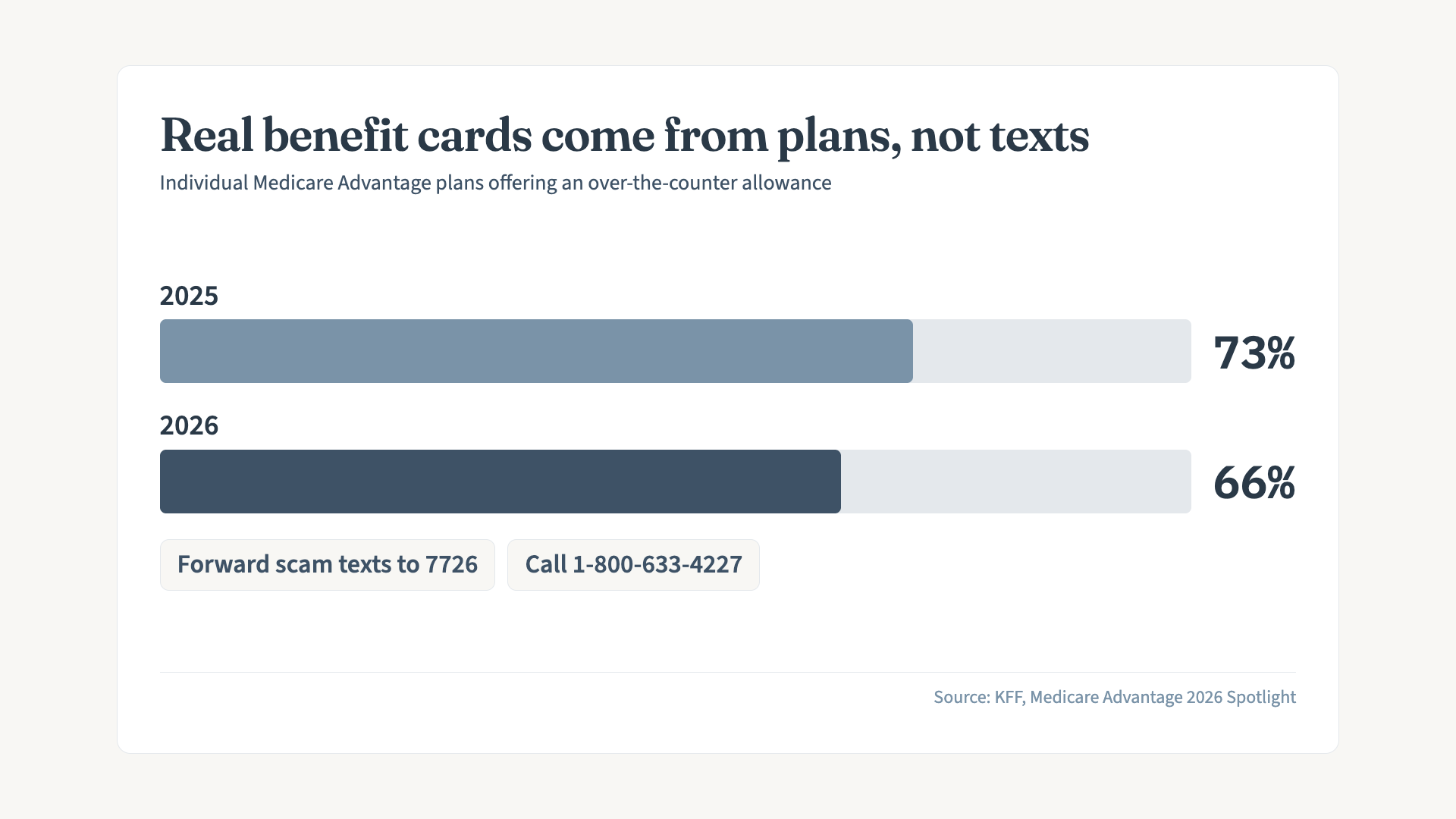
Over the past two years, insurers responded to tightening federal payment rates and rising medical costs by reducing exactly the kinds of benefits the ANOC discloses. Over-the-counter allowances shrank or disappeared across a meaningful share of plans. Meal benefits were reduced. Fitness programs were restructured or dropped. Dental and vision annual maximums were lowered in many plans even where the benefit technically remained. These are precisely the changes that a member who auto-renews without reading the ANOC discovers in February, at the pharmacy counter or the dentist's office, when it's too late to switch.
At the same time, more recent reporting suggests insurer financial health has been improving, which could mean the 2027 plan year looks better than the past two — see Is Medicare Advantage Finally Stabilizing for 2027? That's genuinely uncertain, and it's exactly why the ANOC matters rather than assumptions in either direction — it's the plan-specific, authoritative answer to what your coverage actually becomes.
There's also a network dimension worth watching this year. A wave of hospital systems terminated Medicare Advantage contracts during 2026, and network composition for 2027 will reflect those decisions. If a hospital you'd want to use in an emergency dropped your plan, the ANOC network section is where you'd find out — before you need the hospital rather than after. More on that trend in Is Your 2026 Medicare Hospital Still Taking Your Plan?
Thirty minutes with a document you were probably going to throw away is a genuinely favorable trade for that information.
Related 2026 Medicare Updates
Take our 60-second quiz to see which Medicare path fits your situation before your ANOC arrives — Find Your Medicare Path →