In this article5
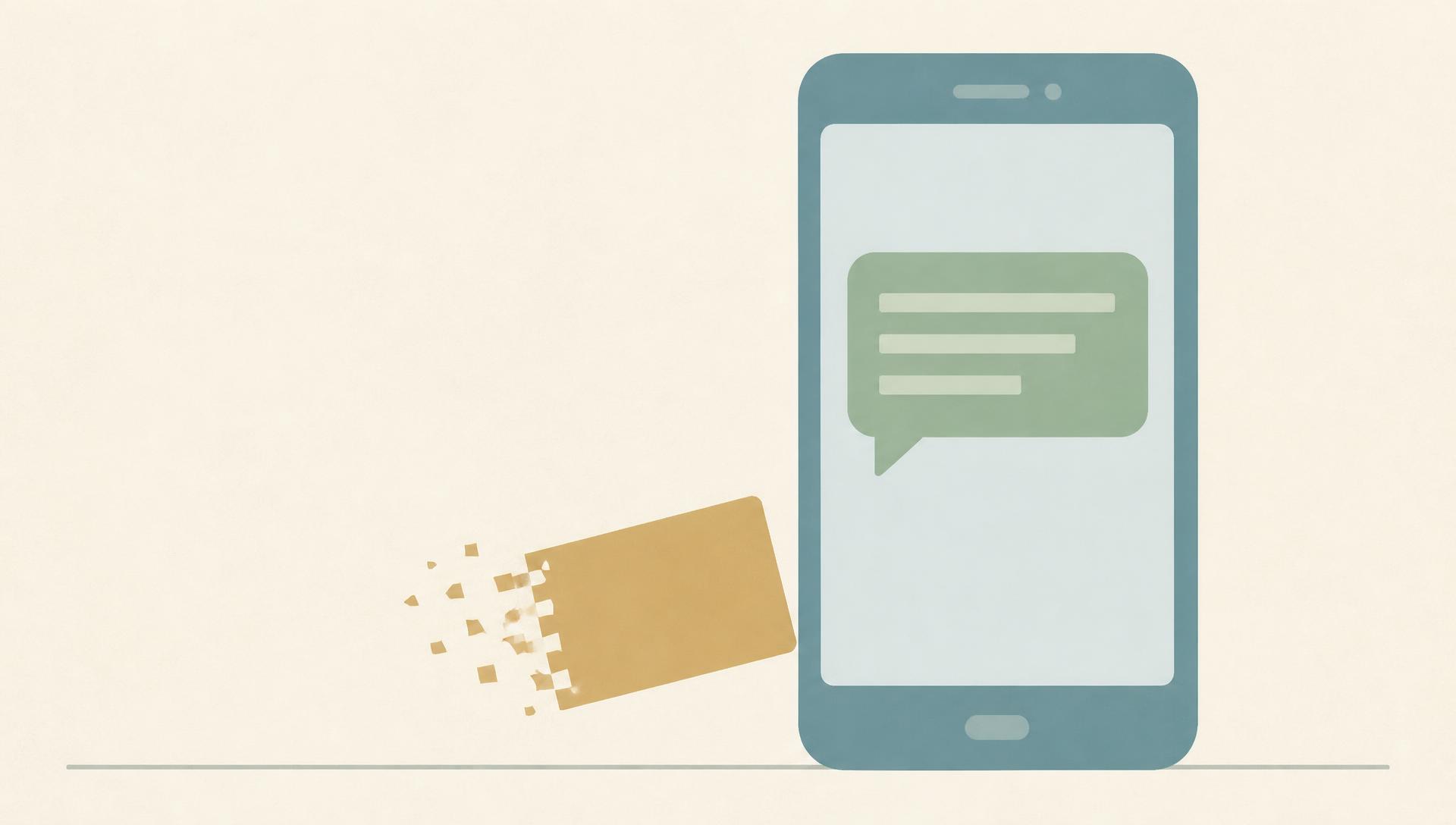
42474 is an SMS short code being used to send texts branded "CenturyMed," offering a senior benefits card worth $2,600 — or $4,200, or $2,750, depending on the version you got. CenturyMed is not Medicare, not a government program, and not an insurance plan. It is a marketing operation, and the dollar figure is a sales number rather than a card anyone will mail you. If you got one of these texts, don't tap the link and don't reply CARD. Here's what the campaign actually is and what to do next.
📋Quick Summary
- 42474 is a short code sending texts branded "CenturyMed" that offer a senior card for food, gas, and utilities
- The advertised amount rotates — $2,600, $4,200, $2,750, $5,100, and $6,400 have all been reported by consumers
- CenturyMed is not a government agency, not Medicare, and not a health plan
- The dollar figure appears to be several separate plan allowances added together across a full year and marketed as one card
- Replying CARD typically routes you to insurance sales contact, not to a card in the mail
- Medicare does not text beneficiaries to offer benefits or request personal information
- Real over-the-counter and flex benefits do exist through some Medicare Advantage plans — but you get them by enrolling in a plan, not by answering a text
- Forward the message to 7726 to report it to your carrier at no cost
Is CenturyMed Legit? Who's Behind the 42474 Texts
No. CenturyMed is the brand name on unsolicited "senior card" texts sent from the short code 42474, and it has no connection to Medicare. It is not a federal agency, not a licensed insurer, and not a Medicare Advantage plan. The name is designed to make a marketing text sound like it comes from an official benefits program.
As for who's behind it: no Medicare-affiliated plan or insurer uses the CenturyMed name. Consumer complaints posted online describe the texts as unsolicited marketing promotions rather than messages from any plan the recipient joined. In practice, the texts feed replies into insurance sales, which is where the money is made.
Despite the format, 42474 is not a phone number — it's an SMS short code, which means you can't call it back; it can only send and receive texts.
The more useful question is where the money figure comes from, because that number is the entire hook.
Some Medicare Advantage plans genuinely include extra allowances — a monthly over-the-counter benefit, a dental limit, a grocery or utility credit. Each is modest on its own. But if you take a $50 monthly over-the-counter allowance, add a $100 dental limit, add a $50 monthly utility credit, and multiply the whole stack across twelve months, you can advertise a number in the thousands. That is roughly how a "$2,600 senior card" gets manufactured. It isn't a card. It's an arithmetic exercise performed on benefits that come from different places, apply under different conditions, and vary by county, carrier, and eligibility.
This is why the number keeps changing — $2,600 in one text, $4,200 in the next. There is no fixed benefit behind it, so the figure can be whatever performs best that week.
What the 42474 Texts Say
The messages follow a consistent template. A typical one reads:
CenturyMed: [Your first name] you have a new $2,600 senior card to use for food, gas & utilities this month! Text CARD to get your card. Reply STOP to unsubscribe.
Four things are worth noticing in that single sentence.
Your first name is in it. That's not a sign of legitimacy — it's a sign your name and number appeared together on a purchased list. One person who reported these texts to the BBB received a $2,600 offer addressed to her husband, who died in 2018. The list is old, bought, and not verified against anything.
The amount is arbitrary. Reported variants include $2,600, $4,200, $2,750 for a "food card," $5,100 for food, gas, or rent, $6,400 in "spending card benefits," and a "$2,096 monthly giveback." No real benefit changes value between recipients like that.
The urgency is built in. "This month" implies a window closing. Nothing is actually expiring.
The reply instruction is the point. Everything in the message exists to get you to send the word CARD.
Some versions include a shortened link on a domain resembling the CenturyMed name. Consumers have reported that these links vary from message to message and that the bare domain returns nothing, which is consistent with disposable landing pages rather than a stable business.
➤ Why Did You Get a New 2026 Medicare Card in the Mail?
➤ Did You Get Medical Equipment You Never Ordered? It's a Scam
Related Medicare Updates
🔍 Text HELP to the Number
Every SMS short code operating legally in the United States has to respond to the word HELP with the name of the company running it and a description of the service. Text HELP to any short code you don't recognize and read what comes back.
A recognized company name means the code is registered — though the specific message can still be misleading, so verify the content by calling that company at a number you looked up yourself.
An unfamiliar name means you landed on a marketing list. Text STOP to get off it.
Nothing at all is also an answer. A code that ignores HELP isn't following the rules it agreed to follow, and that's worth reporting by forwarding the message to 7726.
What Happens If You Already Texted CARD
This is the part almost nobody explains, and it's the thing most people actually want to know.
Replying does not produce a card. What it produces is contact. Your number is confirmed as belonging to a real, responsive person in the Medicare age bracket — which is commercially valuable — and you are typically routed toward insurance sales. That may mean a call from a licensed agent, a transfer to a call center, or a landing page asking for your ZIP code, date of birth, and current coverage.
From there, the pressure is toward enrolling you in a Medicare Advantage plan the caller earns commission on. That is a real risk with real consequences, because switching plans outside an eligible enrollment period may not be possible, and switching into the wrong one can cost you your doctors, your drug coverage, or your Medigap eligibility.
If you replied CARD but gave nothing else: You'll likely get calls. Don't answer numbers you don't recognize, and don't engage. The contact usually tapers off.
If you gave your ZIP code, date of birth, or plan details: Nothing catastrophic has happened, but you're now on an active lead list. Expect sustained calls. Do not agree to anything by phone. If someone claims you've already enrolled in something, call 1-800-MEDICARE (1-800-633-4227) to check your actual enrollment status.
If you gave your Medicare number, Social Security number, or payment information: Act today. Call 1-800-MEDICARE to report it and ask them to flag your account. Review your next Medicare Summary Notice for services you didn't receive. If a Social Security number was involved, place a free credit freeze with all three bureaus. Report it at ReportFraud.ftc.gov.
If you were switched into a plan you didn't knowingly agree to: This is called an unauthorized enrollment, and there are remedies. Call 1-800-MEDICARE and ask about a Special Enrollment Period based on misrepresentation, and contact your State Health Insurance Assistance Program for free help.
Are There Real Benefit Cards? Yes — With Real Numbers
Here's the uncomfortable part that makes this campaign effective: the underlying benefit is not imaginary.
Plenty of Medicare Advantage plans do include an over-the-counter allowance, and some include grocery or utility support for members with qualifying conditions or income levels. Members receive a prepaid card and use it at participating retailers. If you're on an MA plan, you may have one already.
What's different about the real version:
The amounts are smaller and monthly. Real allowances typically run in the tens of dollars per month, not thousands per year presented as a lump sum.
They come from your plan, not from a text. You get them by being enrolled. Your plan tells you about them in your Evidence of Coverage, and the card arrives by mail from the plan you already have.
Nobody has to recruit you. A benefit you're entitled to doesn't require a marketing campaign to reach you.
If you want to know whether real allowances are available where you live, the honest answer is that it depends on your county and the plans offered there. You can check at Medicare.gov's plan finder, or call 1-800-MEDICARE, or talk to your State Health Insurance Assistance Program, which gives free unbiased counseling and doesn't earn commission on what you choose.
✅What This Means For You
If you're turning 65 this year: Your age becomes visible in public and commercial records around eligibility, and marketing contact spikes hard in that window. Set the rule now: Medicare doesn't text you offers. It already has your information and doesn't need you to confirm it.
If you're already on Medicare: No card, allowance, or "giveback" is delivered by text message. If a message offers one, it's marketing at best. Forward it to 7726 and delete it.
If you're on Medicare Advantage: You may genuinely have an over-the-counter or flex benefit — which is exactly why this campaign works on MA members. Check your Evidence of Coverage or call the number printed on your insurance card. Never a number from a text.
If someone in your family received one addressed to a person who has died: That's a purchased list, and it's worth reporting to the FTC. It's also a signal that the deceased person's information is circulating commercially, which is worth watching for other reasons.
➤ Did You Get Medical Equipment You Never Ordered? It's a Scam
Explore Further
42474 / CenturyMed Quick Reference
- What is 42474?
- An SMS short code sending texts branded "CenturyMed"
- Is CenturyMed part of Medicare?
- No — not a government agency, not a health plan
- Is CenturyMed a real company?
- No verified company stands behind it — it operates outside any Medicare affiliation, using official-sounding branding
- Is the $4,200 senior card real?
- No — $4,200 is one rotating marketing figure, not a card anyone will mail you
- What do the texts offer?
- A "senior card" for food, gas, and utilities
- Why does the amount change?
- It is a marketing figure, not a fixed benefit
- Reported amounts
- $2,600, $4,200, $2,750, $5,100, $6,400, $2,096
- What happens if I text CARD?
- You are typically routed to insurance sales contact
- Does Medicare text beneficiaries?
- No — Medicare does not text offers or request information
- Are real OTC benefits available?
- Yes, through some Medicare Advantage plans — via enrollment
- How do I stop the texts?
- Text STOP; forward the message to 7726
- Where do I report it?
- 7726, ReportFraud.ftc.gov, and 1-800-MEDICARE
- Medicare's real number
- 1-800-MEDICARE (1-800-633-4227)
The One Rule That Outlasts Any Number
Short codes get retired. Brand names get swapped. The number you searched today may be dead in a month, and "CenturyMed" will become something else that sounds equally official.
What doesn't change: Medicare will never contact you first to offer a benefit or to ask for your Medicare number, Social Security number, or financial information. It already has all of it. Any message that arrives unsolicited and asks you to confirm, verify, activate, or claim something is either marketing or worse — and either way, it should be verified through a phone number you looked up yourself.
That rule costs you sixty seconds and works on the next campaign too, which is more than can be said for memorizing a list of bad numbers.
If you're ever unsure: don't tap anything, look up the organization's real number independently, and call. Legitimate programs are still there when you call back. Marketing operations built on urgency are not.
➤ Is Medicare Really Calling You in 2026 — Or Is It a Scam?
➤ Find your State Health Insurance Assistance Program
Texts that dangle a Medicare benefit card are a wider pattern, and our guide to telling a real Medicare benefit card text from a fake gives four quick checks.
Scammers also attach themselves to real news, including the one-time $90 payment going out in October 2026: how to tell the real $90 Medicare payment from a scam.
Related Medicare Scam & Safety Guides
- Is Medicare Really Calling You in 2026 — Or Is It a Scam?
- Did You Get Medical Equipment You Never Ordered? It's a Scam
- Why Did You Get a New 2026 Medicare Card in the Mail?
- Why Did Your 2026 Medicare Flex Card Get Declined?
- Could You Be Enrolled in Hospice Care Without Knowing It?
- Why Did My 2026 Medicare Plan Cut My Benefits?